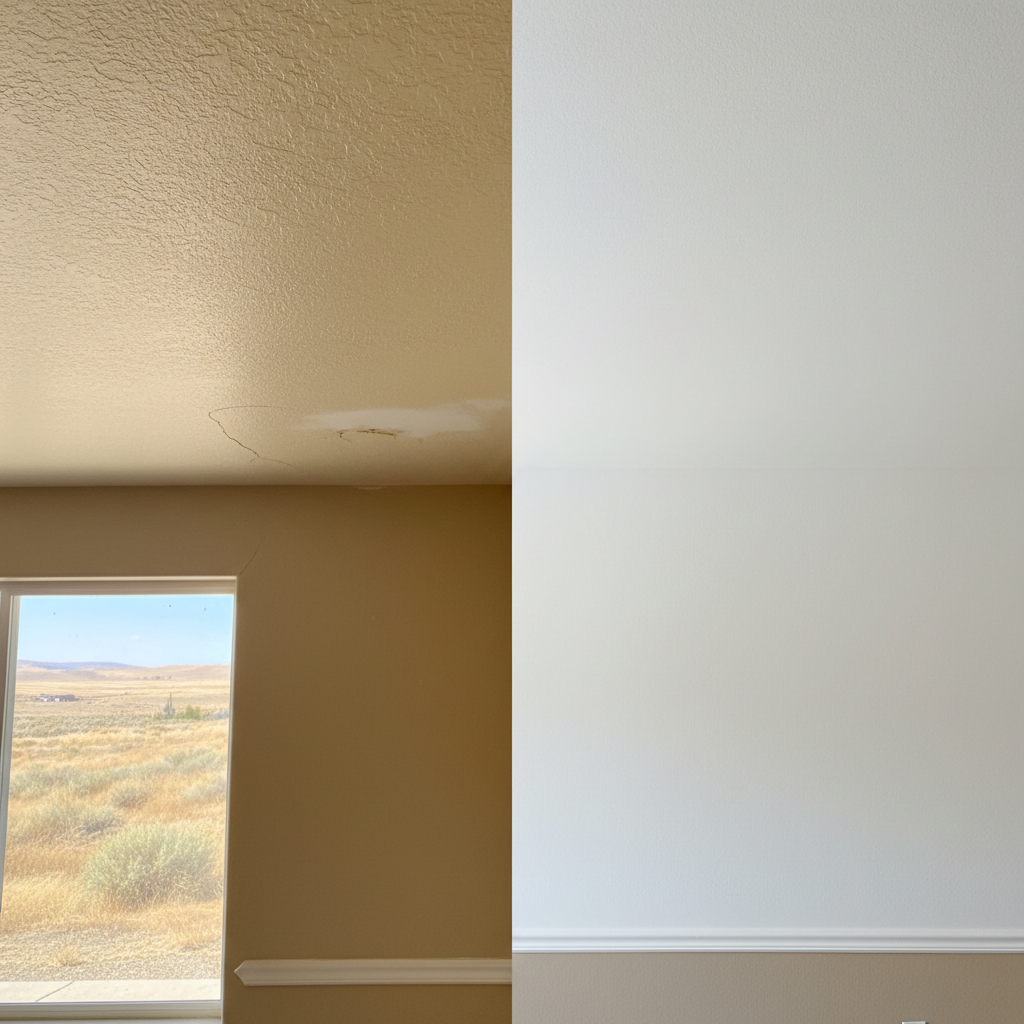
Alright, let's talk about those popcorn ceilings. Chances are, if you've got them, you're probably tired of looking at them. They collect dust like crazy, they're a pain to paint, and honestly, they just look dated. When homeowners in Boise call us up, usually from places like the Bench or older parts of the North End, asking about getting rid of them, there are two main ways we tackle it: either we scrape and skim coat, or we put new drywall right over the top. Both get the job done, but they're pretty different in terms of cost, time, and what you end up with.
Option 1: Scrape and Skim Coat
This is what most people think of when they hear "popcorn ceiling removal." You wet the popcorn texture, scrape it all off, and then apply a thin layer (or two, or three) of joint compound to make the ceiling perfectly smooth. It's a classic method, and for good reason.
The Good Stuff (Pros):
- Cost-Effective: Generally, this is the cheaper option. You're paying for labor and materials like joint compound, primer, and paint. No need for new sheets of drywall.
- Maintains Ceiling Height: You don't lose any ceiling height. This might not seem like a big deal, but in a room with standard 8-foot ceilings, every inch counts.
- Original Look: If the drywall underneath is in decent shape, you get back to a smooth, original ceiling surface. It's like turning back time for your home's interior.
The Not-So-Good Stuff (Cons):
- Messy as All Get-Out: I'm not going to lie, this is a dusty, wet, messy job. Even with all our precautions, you're going to have some cleanup. We seal off rooms, lay down tarps, but still, expect a bit of a production.
- Labor-Intensive: Scraping takes time, especially if the popcorn was painted over multiple times. Then you've got the multiple coats of mud, sanding, priming, and painting. It's a process.
- Substrate Dependent: The final finish depends a lot on what's underneath. If the original drywall was poorly installed or has a lot of damage, a skim coat might not completely hide all imperfections without a lot of extra work. Sometimes, even after scraping, you find issues that need more extensive repairs.
Option 2: Drywall Overlay
This method involves installing new, thin sheets of drywall (usually 1/4-inch thick) directly over your existing popcorn ceiling. It's a bit like putting a fresh, clean slate right on top.
The Good Stuff (Pros):
- Super Smooth Finish: This is where overlays really shine. You get a brand-new, perfectly smooth ceiling. Since you're starting fresh, you don't have to worry about the condition of the old drywall underneath.
- Less Mess (Relatively): While cutting and hanging drywall creates dust, it's a different kind of mess than the wet, gritty stuff from scraping. It's generally more contained and easier to clean up.
- Faster Installation: For larger areas, hanging new sheets can sometimes be quicker than the extensive scraping and multiple skim coats, especially if the original popcorn is stubborn.
- Improved Soundproofing/Insulation: Adding another layer of drywall can offer a slight improvement in sound dampening between floors and a tiny bit of extra insulation, which is always nice during our cold Boise winters.
The Not-So-Good Stuff (Cons):
- Higher Material Cost: You're buying full sheets of drywall, plus more screws and joint compound. This drives up the material cost significantly compared to just mud for a skim coat.
- Slight Loss of Ceiling Height: You'll lose about 1/4 to 3/8 of an inch of ceiling height. For most homes, this isn't noticeable, but it's something to be aware of, especially if you have very low ceilings already.
- More Complex for Fixtures: Electrical boxes for lights and fans will need extensions to bring them flush with the new ceiling surface. This adds a little complexity and cost.
- Heavier: You're adding more weight to your ceiling structure. This is rarely an issue for standard residential construction, but it's a factor.
My Recommendation for Boise Homeowners
Okay, so which one should you go with? Here's how I usually advise folks here at Boise Drywall Company:
If your budget is tighter, and you're prepared for a bit more dust and a longer process, but you want to maintain every bit of ceiling height, then scraping and skim coating is probably your best bet. It's a tried-and-true method that delivers a great result when done right.
However, if you're looking for the absolute smoothest, most pristine finish, want to minimize the wet mess, and don't mind the slightly higher cost and minimal ceiling height loss, then a drywall overlay is the way to go. It's a more modern approach that guarantees a perfect surface, no matter what horrors might be lurking under that old popcorn.
For homes built in the 70s and 80s around here, especially those with original drywall that might not have been taped perfectly back then, I often lean towards the overlay. It just guarantees a better, flatter finish without having to fight with old imperfections. Either way, getting rid of those popcorn ceilings will instantly update your home and make it feel brighter and more modern. Give us a call, and we can take a look at your specific situation and give you an honest quote.